Writing a brief for an AI project: a one-page template
The one-page brief that gets comparable quotes and a pilot you can judge: the task, the number, the systems, the exceptions, exclusions, and who decides.
3 min read Reviewed 22 September 2026 · AgeBridge Editorial

A one-page brief for an AI project has six parts: the task in one sentence (trigger, action, outcome); the number that shows it worked, with today's value; the systems involved and who grants access; the exceptions that go to a person and who approves what; what is explicitly excluded; and who decides, by when. With that page, two or three builders can give you comparable quotes and a two-week pilot can be judged against something written. Without it, every quote is for a different project.
Why one page changes everything
Builders quote what they understand. A vague request ("something with AI for our leads") gets a vague proposal, priced for the unknown. A one-page brief gets a scope, a fixed price, and a "done" that both sides can point to. It also protects you: when the pilot ends, the question "did it work?" has an answer written before anyone was paid.
- The task, in one sentence: Trigger → action → outcome
- The number: What it is now, what would count as working
- Systems and access: Which tools, who grants admin
- Exceptions and approvals: What goes to a person, who taps
- Excluded, decider, timeline: What's not in scope, who answers, when
The template
Copy this into a document and fill it in. Each part is one to three lines.
1. The task. When [trigger] happens, [the automation] should [action], so that [outcome]. Example: When a lead submits the website form, reply on WhatsApp within a minute with a greeting and one question, and log the lead in the CRM, so that no lead waits and nothing is lost.
2. The number. Today: [current value, how measured]. Working means: [target]. Example: Median time to first reply is about nine hours (from CRM timestamps, last two weeks). Working means under five minutes.
3. Systems and access. [Tool 1], [Tool 2], [channel]. Admin access granted by [name] on [date]. Example: Website form (Elementor), HubSpot CRM, WhatsApp Business number. Admin from Dana on day one.
4. Exceptions and approvals. Goes to a person when: [cases]. A person approves before: [actions]. Example: Goes to Dana when the lead asks about pricing for more than ten units or writes in a language other than Hebrew or English. Nothing is sent that quotes a price.
5. Excluded. Not in this project: [list]. Example: Follow-up sequences, ad-platform leads, phone leads. Those come after the pilot.
6. Decider and timeline. Questions answered by [name] within [time]. Pilot from [date] to [date]. Review call on [date].
Gathering the test cases
Alongside the brief, collect twenty to forty real examples from last month: actual form submissions, actual messages, including the odd ones. The builder tests against these, and you judge the outputs. This is where detail lives, and it's more useful than any paragraph in the brief.
What to expect back
A builder should return a short scope that restates your brief in their words, a fixed price, running costs, a timeline with a test session and a live week, and a list of what they need from you. If the scope changes your task, that's fine when they explain why; if it ignores your exceptions, ask.
Common mistakes
- Two tasks in one brief. Split them.
- A number that can't be measured with the systems you have. Add the field, or pick another number.
- "Everything else" in the excluded section left blank. Write the list; it's where scope creep hides.
- No decider named. Slow answers are the main reason pilots overrun.
Best fit and not a good fit
Best fit: any first or second automation project. Not a good fit: a multi-system transformation; write one brief per piece and sequence them.
What to do next
Fill the six parts for the task you scored highest in the "what to automate first" guide. Then post it to two or three builders on the marketplace who show a similar build, and compare the scopes that come back.
Questions people ask
Isn't writing the brief the builder's job?
The builder turns it into a technical scope. The task, the number and the exceptions are yours: nobody else knows how a Tuesday goes in your business. A good builder will improve your brief on the first call; a blank page they can't.
How detailed should it be?
One page. If it needs three, the project is probably two projects. Detail belongs in the test cases, which you'll gather from last month's real examples.
What if I don't know the number?
Count for one week before writing the brief: how many leads, how long to reply, how many no-shows, how many documents. A week of counting is the most valuable hour you'll spend on the project.
Sources
- Make: Getting started · Make · 2026-06-01
Editorial guidance, not advice. Estimates are labelled and dated; nothing here is AgeBridge marketplace data unless it says so.
Find builders who have done this
Profiles with real projects and evidence, not claims.
Browse the marketplaceRelated guides

How much does AI automation cost in Israel? Ranges, assumptions, dated
Editorial cost ranges in shekels for common small-business automations, what moves a quote up or down, and the running costs owners forget.
3 min read · 22 September 2026
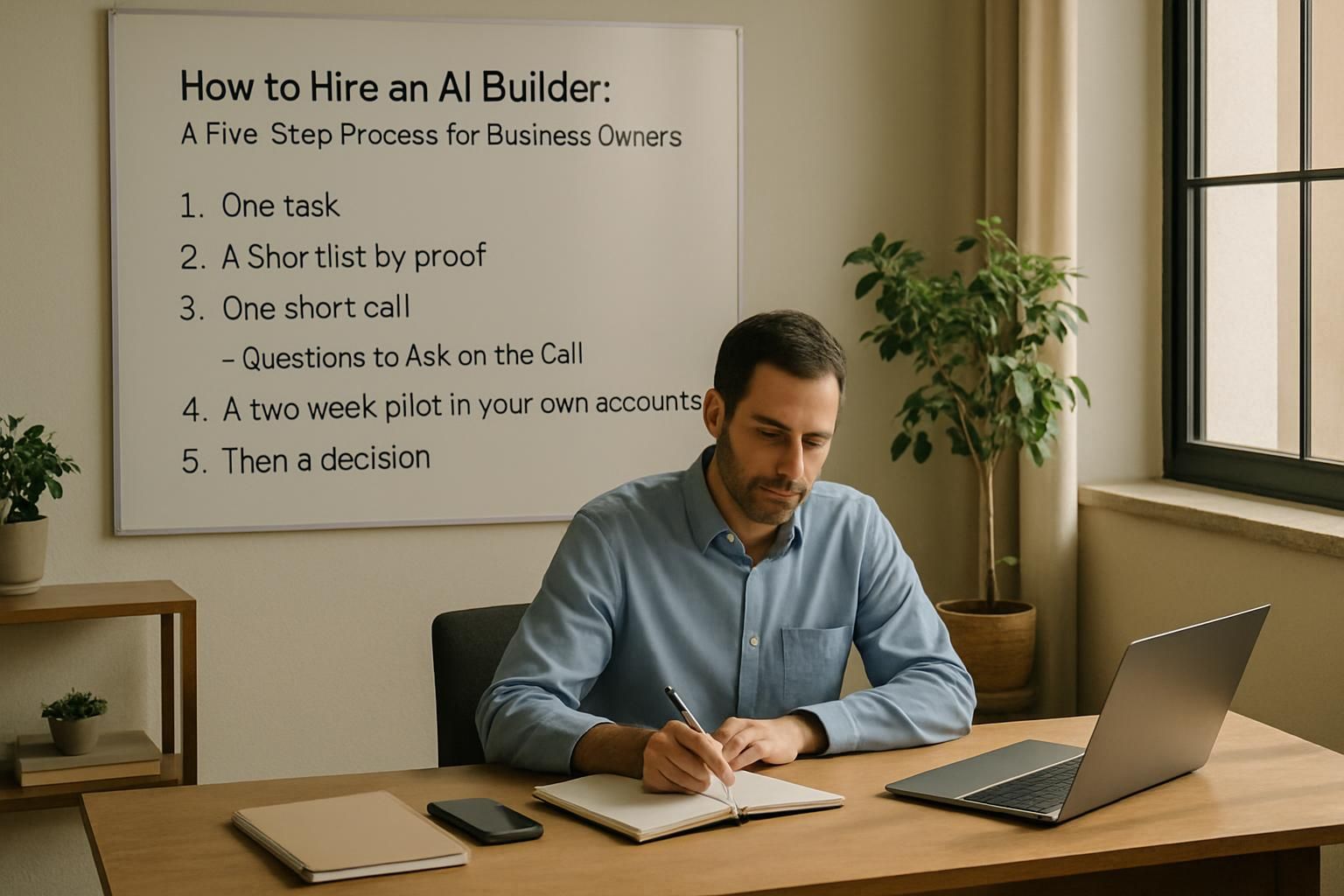
How to hire an AI builder: a five-step process for business owners
Five steps: one task, a shortlist by proof, one short call, a two-week pilot in your own accounts, then a decision. Plus the questions to ask on the call.
3 min read · 22 September 2026
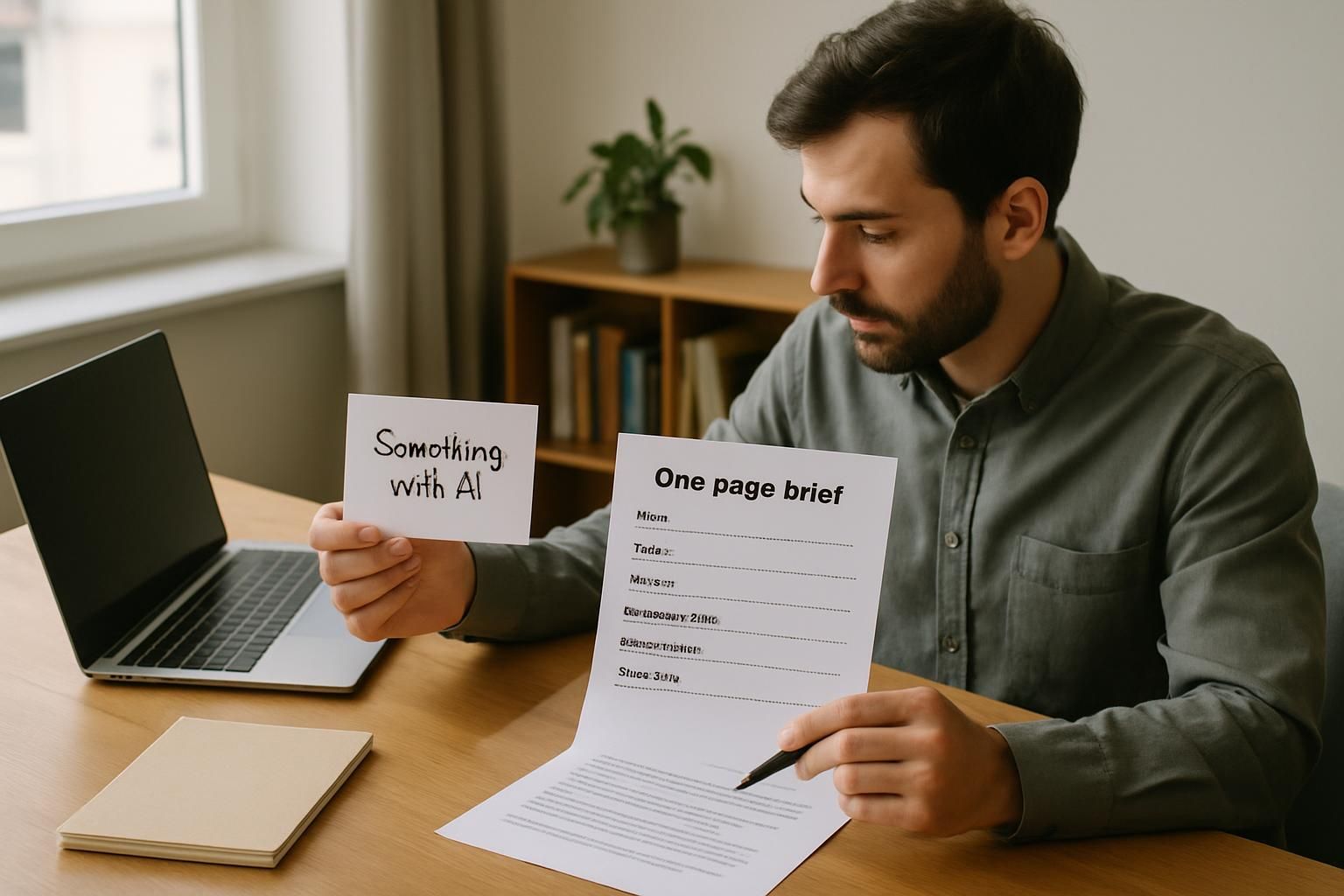
Turning a vague request into a clear brief (with the template)
'Something with AI' becomes a one-page brief: task, trigger, systems, exception path, measurement and what's out. The questions to ask and the template.
3 min read · 22 September 2026