WhatsApp automation in Israel: what's possible and allowed
The WhatsApp Business Platform, templates and the 24-hour window, opt-in rules in Israel, and the automations that work inside those limits.
3 min read Reviewed 22 September 2026 · AgeBridge Editorial
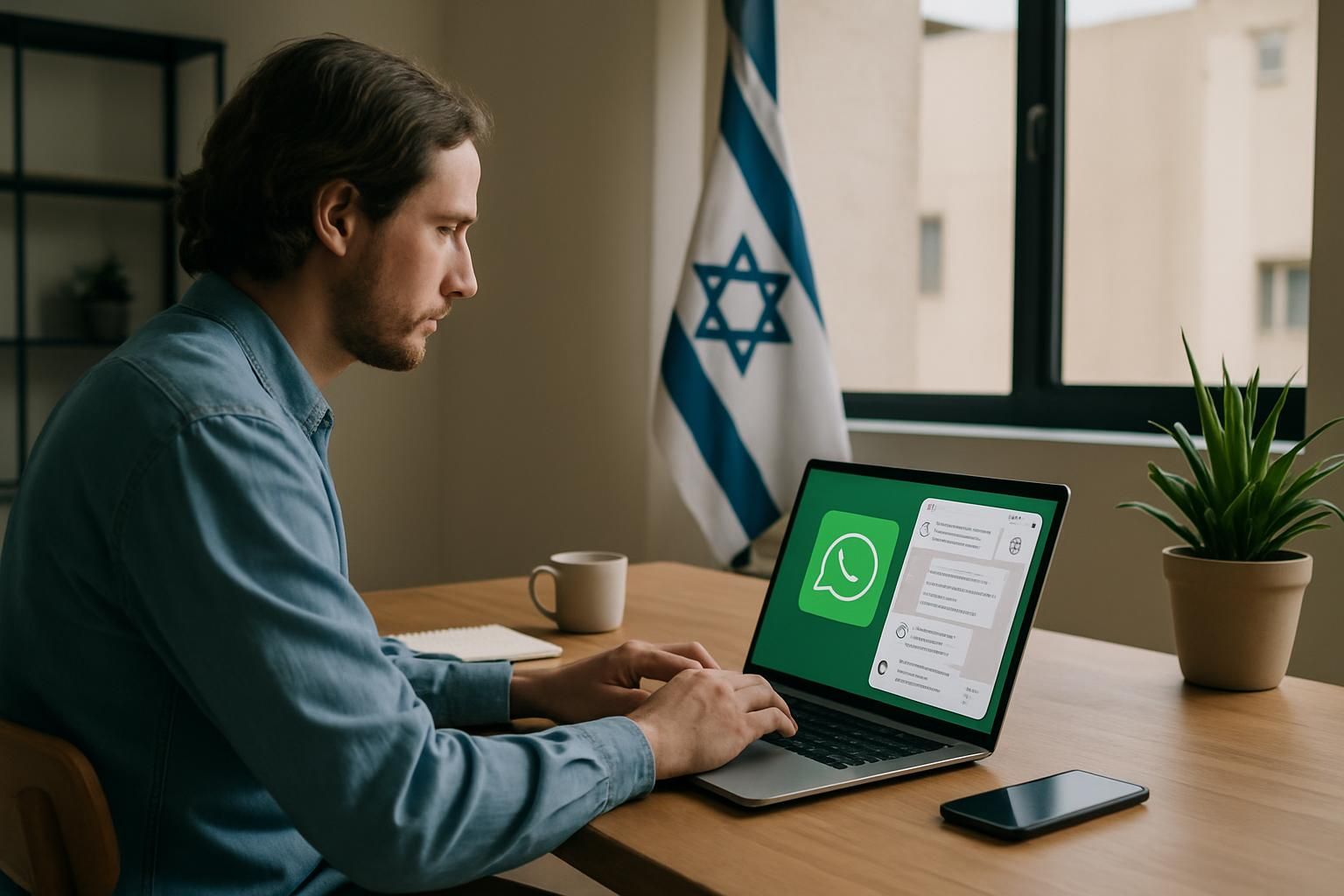
WhatsApp automation for an Israeli business is possible and reliable when it runs on the WhatsApp Business Platform, replies freely inside the 24-hour customer-service window, uses approved templates outside it, and sends marketing only to people who opted in and can opt out. Within those limits the automations that work are lead replies, appointment reminders and confirmations, order and status updates, and hand-offs to a person. Automating the consumer app or blasting unsolicited promotions risks the number and breaks Israeli law on commercial messages.
Which WhatsApp is this about?
There are three: the consumer app, the WhatsApp Business app for small businesses, and the WhatsApp Business Platform (the API). Only the Platform is built for automation. Tools that script the phone apps violate the terms and get numbers banned; a client who lost their number to a "cheap" bot is a client who won't trust the next one.
- Did the customer message in the last 24 hours? (Yes → Free-form reply allowed; No → Needs an approved template)
- Is it a marketing message? (Yes → Needs documented opt-in + opt-out; No → Utility template (reminder, update))
The rules that shape every automation
| Rule | What it means for the build |
|---|---|
| 24-hour window | Customer messages first → free-form replies for 24 hours. Perfect for lead replies and support. |
| Templates | Outside the window, only pre-approved templates: reminders, confirmations, updates. Write them to be approved; keep placeholders sensible. |
| Marketing opt-in | Promotions need documented consent and an easy opt-out. Israeli law on commercial messages applies on top of Meta's policy. |
| Quality rating | Blocks and reports lower the number's rating and limits. Frequency and relevance matter. |
| Business verification | A verified business profile with the real name and category; customers see who is messaging. |
Read the current policy before every project; Meta updates categories and pricing, and the table is a map, not the rules.
Automations that work inside the limits
Lead reply within a minute. The customer messaged, so the window is open. Acknowledge, ask one or two qualifying questions, create the CRM entry, hand off to a person for anything unusual. The most common first project for a reason.
Appointment reminders and confirmations. Utility templates with a confirm/cancel button, sent a day before. When the customer taps, the window opens and the automation can continue the conversation. Free the slot on cancel.
Order and delivery updates. Utility templates triggered by the shop's system. Low risk, high appreciation.
Support answers from the business's documents. Inside the window, a RAG assistant answering from the help centre, citing, and routing to a person when unsure.
Hand-off to a person. Every automation above ends in one: the person continues in the same thread with full context.
What to avoid
- Bulk promotions to lists without opt-in, in any tool.
- Templates written as marketing but categorised as utility to dodge consent; both Meta and the law see through it.
- Storing conversation content longer than the task needs; the data checklist applies.
- Automating the phone apps.
Working with Israeli providers
Businesses usually connect through a business solution provider that handles the Platform, phone number and templates. Choose one that supports Hebrew templates, buttons and webhooks into Make, n8n or your code, and that shows the quality rating. Keep the number in the client's name and account.
Best fit and not a good fit
Best fit: businesses where customers already write on WhatsApp: clinics, salons, contractors, shops, agents. Not a good fit: cold marketing to purchased lists; it isn't allowed and it kills the number.
What to do this week
Read the current platform policy. Then map your client's messages into the two windows: which are replies inside 24 hours, which need templates, which are marketing. That map is the architecture.
Questions people ask
Can I use the regular WhatsApp app or WhatsApp Business app for automation?
Automating the consumer or small-business app breaks WhatsApp's terms and risks the number. Automation belongs on the WhatsApp Business Platform through Meta or a business solution provider.
What is the 24-hour window?
After a customer messages the business, the business can reply freely for 24 hours. Outside it, only pre-approved templates can be sent, and marketing templates need opt-in.
Is a reminder a marketing message?
An appointment reminder or an order update is a utility message. A promotion is marketing. Meta's template categories and Israeli law both draw the line; when unsure, treat it as marketing.
Sources
- WhatsApp Business Platform: policies · Meta · 2026-06-01
- WhatsApp Business Platform documentation · Meta · 2026-06-01
- Privacy Protection Authority · gov.il · 2026-06-01
Editorial guidance, not advice. Estimates are labelled and dated; nothing here is AgeBridge marketplace data unless it says so.
Build it step by step with a guided build
Real projects, one stage at a time, with proof at the end.
See guided buildsRelated guides

Handling client data safely: a builder's checklist for Israel
What to collect, where it may go, who can see it and how long it's kept, plus the Israeli privacy basics to know before touching a client's customer data.
4 min read · 22 September 2026

Lead-qualification agents: an architecture that holds up
An agent that answers a new lead, asks the two questions that matter, scores the fit, books or routes, and never guesses: components, rules and failure modes.
3 min read · 22 September 2026
What should a small business automate with AI first?
A decision method for owners: score your repetitive tasks by volume, pain and clarity, start with one that touches customers, and run it as a two-week pilot.
4 min read · 22 September 2026